How to Get Your Driver’s License Back After Multiple DUIs in Metro Detroit
Losing your driver’s license after multiple DUI convictions in Michigan can feel overwhelming. For many people in Metro Detroit, it doesn’t just affect convenience — it affects employment, family responsibilities, and basic independence.
The good news is this: in many cases, you can get your license back.
However, Michigan’s driver’s license restoration process is strict, highly technical, and handled through the Secretary of State’s Administrative Hearings Section (AHS). Success depends on preparation, documentation, and credibility.
Let’s walk through how the process works — and what you need to know before filing.
Quick Answer: Can You Get Your License Back After Multiple DUIs in Michigan?
Yes — but only if you can prove to the Michigan Secretary of State that your alcohol or substance abuse problem is under control and likely to remain under control.
If you’ve had:
-
2 DUI convictions within 7 years, or
-
3 DUI convictions within 10 years
Your license will be revoked — not suspended. That distinction matters. A revoked license does not automatically come back. You must formally petition for restoration and win a hearing.
Why Michigan Revokes (Not Suspends) After Multiple DUIs
Michigan law treats repeat drunk driving offenses very seriously. After multiple convictions, the state assumes there is an ongoing substance use issue.
When your license is revoked:
-
There is no automatic reinstatement date
-
You cannot simply pay a fee to get it back
-
You must prove sobriety
This is not a court matter anymore. It becomes an administrative case handled by the Secretary of State.
That’s where many people make mistakes — they assume it works like a traffic ticket. It does not.
Step 1: Confirm You’re Legally Eligible to Apply
Before anything else, you must confirm you’ve completed the mandatory revocation period.
Generally:
-
2 DUIs in 7 years = minimum 1-year revocation
-
3 DUIs in 10 years = minimum 5-year revocation
If you attempt to file early, your case will be dismissed.
Eligibility is the easy part. Winning is the hard part.
Step 2: Prove Sobriety — The Core of Every Restoration Case
The Secretary of State is not asking whether you deserve your license back.
They are asking one question:
Is this person a safe bet to never drink and drive again?
To win, you must prove two things by clear and convincing evidence:
-
Your alcohol or substance abuse problem is under control.
-
It is likely to remain under control.
That means documented, verifiable sobriety — not just good intentions.
What “Under Control” Usually Means
Typically, this requires:
-
A minimum period of voluntary sobriety (often 12+ months)
-
A professional substance use evaluation
-
Multiple notarized letters of support
-
Consistent testimony at your hearing
If there are inconsistencies, your case will likely be denied.
Step 3: Complete a Substance Use Evaluation
This evaluation is critical.
It must be completed by a licensed evaluator and include:
-
Diagnosis history
-
Testing results
-
Treatment history
-
Prognosis
-
Relapse risk assessment
If the evaluation is incomplete or inconsistent with your letters, it can sink your case.
Many denials happen here.
Step 4: Prepare Strong Letters of Support
You will need letters from people who can verify:
-
Your sobriety
-
Lifestyle changes
-
Commitment to avoiding alcohol
These letters must be specific. Generic statements like “He’s a good guy” do not help.
Instead, they should describe:
-
How long the writer has known you
-
How often they see you
-
Personal knowledge of your sobriety
-
Specific changes in behavior
One weak letter can create credibility issues.
Step 5: The Hearing Before the Administrative Hearing Section (AHS)
If your paperwork is accepted, you’ll be scheduled for a hearing — typically conducted virtually or at a local hearing office serving Metro Detroit.
During the hearing, the hearing officer will question you about:
-
Your drinking history
-
Treatment history
-
Relapses
-
Lifestyle changes
-
Future safeguards
This is where preparation matters most.
If your testimony conflicts with your evaluation or letters — even slightly — it raises red flags.
What Happens If You Win?
If approved, you do not immediately receive a full license.
Instead, you typically receive:
-
A restricted license
-
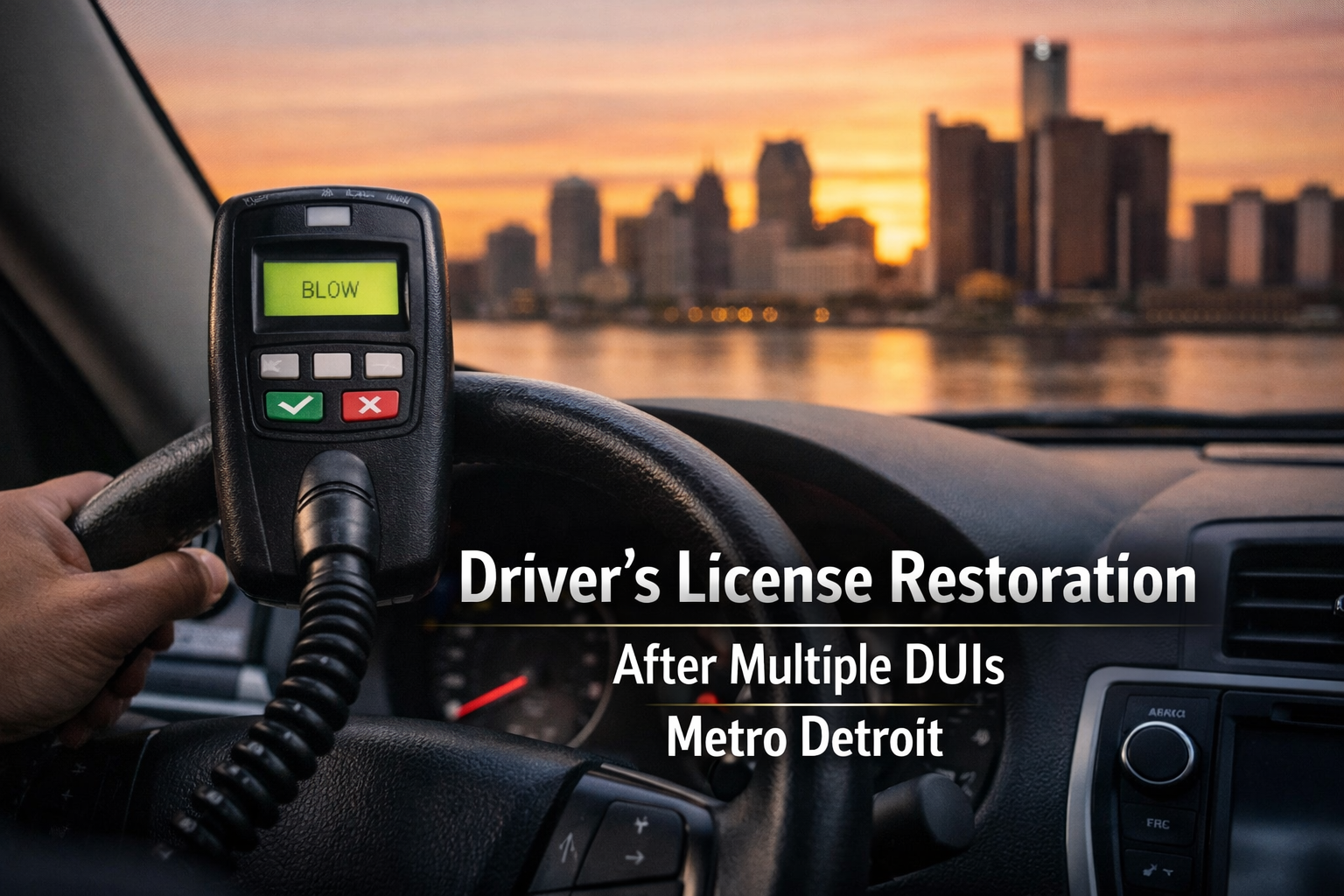
Requirement to install an ignition interlock device
You must drive with the interlock for at least one year before requesting full reinstatement.
Any violation can restart the process.
What If You Lose?
If your petition is denied, you generally must wait one full year before reapplying.
This is why careful preparation matters.
A denial is not just disappointing — it delays your ability to work, drive your children, or move forward.
Common Mistakes People Make in Metro Detroit License Restoration Cases
Even smart, hardworking people lose restoration hearings. Here are some of the most common reasons:
-
Filing before true sobriety is established
-
Inconsistent letters of support
-
Poorly completed substance evaluations
-
Minimizing past alcohol use
-
Admitting to “occasional” drinking
Michigan expects complete abstinence in most multiple DUI cases.
If you are still drinking socially, your case is unlikely to succeed.
How Multiple DUI Histories Impact Restoration
The more DUI convictions you have, the more closely your case will be examined.
For example:
-
Prior probation violations
-
Prior relapses
-
Interlock violations
-
Driving while revoked charges
These issues don’t automatically disqualify you — but they must be addressed honestly and strategically.
Trying to hide past mistakes almost always backfires.
Metro Detroit Considerations
If you live in communities like:
-
Livonia
Your hearing will still be handled through the Secretary of State’s Administrative Hearings Section — not the local district court.
However, your underlying DUI cases may have originated in courts such as:
Understanding your full record matters when preparing your restoration petition.
Frequently Asked Questions
How long do I need to be sober before applying?
While there is no automatic rule, most successful cases involve at least 12 months of voluntary sobriety — often longer for multiple DUI convictions.
Can I apply if I still drink occasionally?
In most multiple DUI revocation cases, continued alcohol use will result in denial. The Secretary of State typically expects complete abstinence.
Do I need a lawyer for license restoration?
You are allowed to represent yourself. However, because the burden of proof is high and technical errors can lead to denial, many people choose legal representation.
Is the hearing in court?
No. It is handled by the Michigan Secretary of State’s Administrative Hearings Section, not a district or circuit court.
Why Preparation Matters
Driver’s license restoration is not about paperwork alone. It is about credibility.
The hearing officer is evaluating whether you are genuinely sober — and whether you are likely to remain sober.
That requires:
-
Consistency
-
Documentation
-
Clear testimony
-
Strategic preparation
When done properly, many people successfully regain their driving privileges and move forward with their lives.
If You’re Ready to Start the Process
If you lost your license after multiple DUIs in Metro Detroit, you may have options — but timing and preparation are critical.
The first step is reviewing:
-
Your full driving record
-
Your conviction history
-
Your sobriety timeline
-
Any prior restoration attempts
From there, you can determine whether you’re truly ready to file — or whether additional time or preparation is needed.
If you have questions about restoring your license in Oakland County, Wayne County, or Macomb County, reaching out for guidance can help you avoid costly mistakes and unnecessary delays.
Your ability to drive again may depend on how well your case is prepared.
If you believe you’re eligible to restore your driving privileges, don’t risk delays or denial by filing unprepared. Contact Bennett Law today to schedule a confidential consultation and take the first step toward getting back on the road.
*General Legal Disclaimer
This article is for informational purposes only and is not legal advice. Laws change, and the information here may not reflect the most current legal standards or apply to your specific situation. Reading this page does not create an attorney‑client relationship. For advice about your particular case, you should consult a qualified attorney